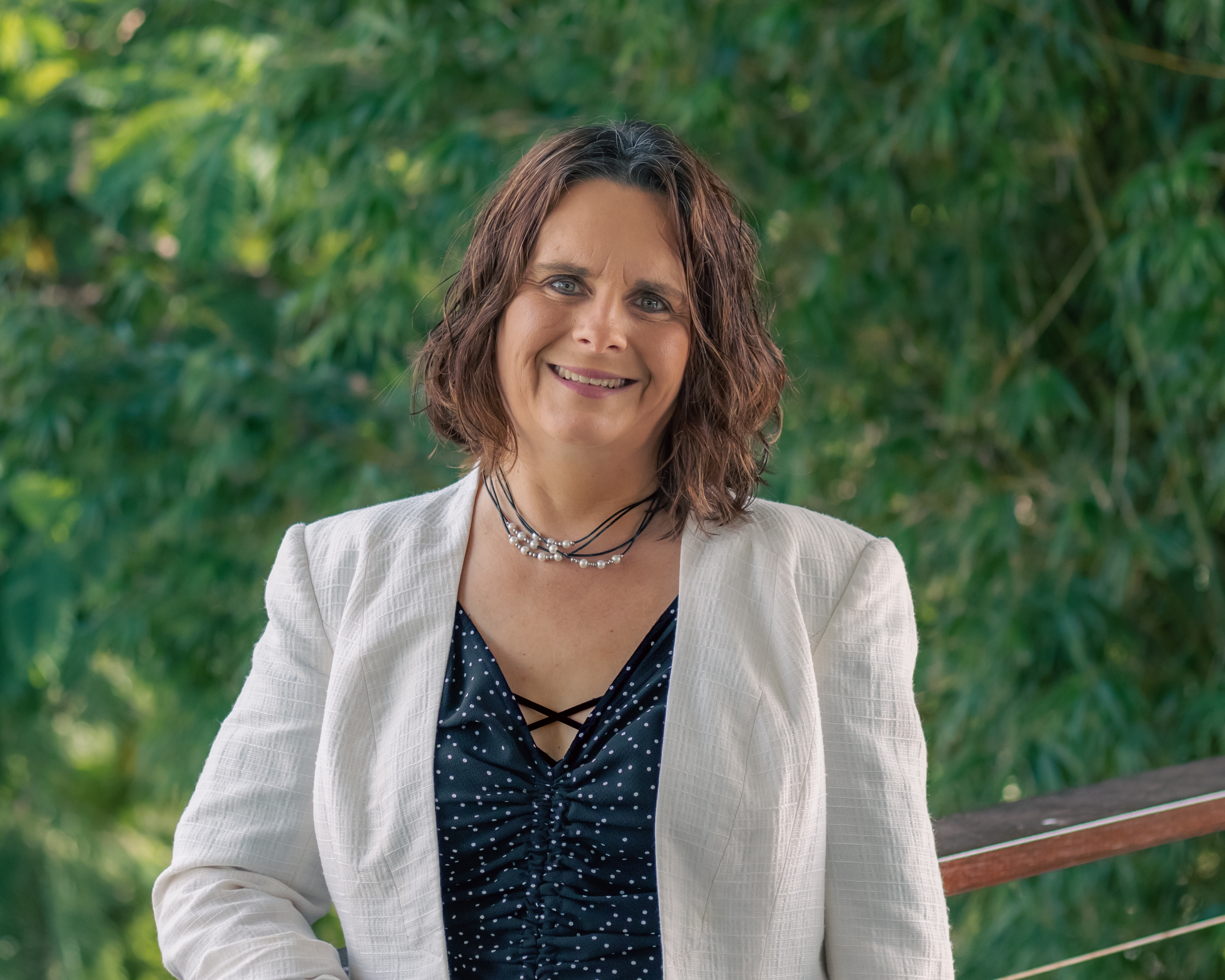
The clinician who refused to accept "that's just how it is."
Rochelle Waite has spent over a decade asking the question the medical system keeps skipping: what is actually driving this — and what does this woman's body need to repair it?
Join the TribeIt started in a
hospital ward in
Melbourne.
As a research student at The Alfred Hospital, Rochelle sat in on consultations with patients battling severe autoimmune conditions. What she witnessed stopped her.
Woman after woman was told the same thing: "This is a life-limiting disease. There's no cure — we'll do our best to slow its progression." They were given immune-suppressing drugs. They were sent home.
Not one conversation about what they were eating. Not one question about sleep, stress, or recovery. Not one clinician asking what the body might need to regulate, adapt, and begin to repair itself.
"It wasn't just what was being said. It was what was missing. A clinician who could interpret the science — and still treat the human."
Rochelle left that research lab not to reject medicine, but to work beyond its constraints. To become the clinician that was missing from those rooms.
That experience shaped everything. The post-graduate studies she chose. The clinical questions she asks. The way she builds care plans. And ultimately — ThriveHer.
Over the following decade in private practice, the same pattern appeared again and again — this time in women in their 40s and 50s. Capable, high-functioning women arriving exhausted, dismissed, and bewildered.
They had seen their GP. Their blood results were normal. They had been told it was stress, or age, or just life. They had been handed antidepressants or a referral to a specialist on a six-month waiting list.
"None of that is care. It's containment. And these women deserved better."
Perimenopause is not a collection of inconvenient symptoms to be managed. It is a complex, intelligent biological transition — one that the medical system is largely unequipped to support well.
Rochelle built ThriveHer because something needed to exist that did.
The body was being excluded from its own treatment.
That had to change.
What drives autoimmune dysfunction? What does a perimenopausal body need to regulate cortisol, restore oestrogen balance, and stop the 2am wake-ups? What is actually behind the brain fog that no GP has been able to explain?
These are not unanswerable questions. They are just questions that require a clinician trained to ask them.
Rochelle spent years building the clinical framework to answer them — across immunology, reproductive medicine, and women's health — so that the women who came to her would finally get a real answer rather than another referral.
The training behind
the clinical thinking.
Rochelle holds post-graduate Masters Degrees across three specialist disciplines — a combination that does not exist anywhere else in Australian naturopathic practice.
It is not about the letters after the name. It is about what those years of training make possible in a clinical consultation — the ability to read the full picture, connect the dots that other practitioners miss, and build a strategy that actually addresses what is driving the problem.
See how this translates into the Tribe →Masters — Immunology (Autoimmunity)
The science of why the immune system turns on itself — and what the body needs to restore regulation. Essential for understanding the inflammatory drivers behind perimenopausal symptoms.
Masters — Women's Health Medicine
Advanced clinical training in the specific physiology of women — hormonal cycles, endocrine function, and the complex interplay of systems that shift during perimenopause.
Masters — Reproductive Medicine
Deep clinical understanding of the reproductive axis — from ovarian function to the downstream effects of hormonal change on mood, cognition, metabolism, and sleep.
This is not general wellness.
This is precision clinical care.
Root cause, not symptom management
Every care plan starts with the question: what is actually driving this? Not what can we use to make this more bearable — but what does this body need to actually repair the underlying dysfunction.
Evidence-informed, not trend-driven
Rochelle integrates biomedical data — pathology, functional test results, symptom patterns — with targeted naturopathic interventions grounded in clinical evidence, not wellness trends.
Built for real life
Every strategy is designed to be implemented by a real woman with a real life. Not a perfect protocol that falls apart the moment Tuesday gets complicated. Life happens in the hallway.
No woman should have to
navigate this alone —
or without someone who
actually understands.
A clinician in your corner. A community of women who get it.
That's what the Tribe is.
Join the Tribe